
PhD in molecular biology: Evolution of multicellularity in green plants
Ústav molekulární biologie rostlin
Terestrializace rostlin
Pracovní smlouva
Vědecká
Doba určitá
Kratší
20
31. 1. 2025
Magisterské
Molecular biology and/or genetics
Popis pracovní pozice:
You will be working in a newly established research group, led by Lenka Caisova. Our group focuses on the establishment of the green multicellular alga Draparnaldia as a new model to study the evolution of multicellularity and terrestrialization in green plants. (https://www.biorxiv.org/content/10.1101/2024.09.12.612648v1).
Position is focused on the evolution of multicellularity. This topic is extremely relevant for studying how life evolved, but remains poorly understood because of lack of suitable models.
Green plants contain two main lineages: chlorophytes and streptophytes. These two lineages evolved multicellularity independently and although they often co-exist in the same habitats; only Streptophyte algae have managed the transition from water and diversified into the amazing variety of all the plants. However, some Chlorophyte algae acquired a developmental complexity comparable to the early land plants and the novel chlorophyte algal model that we are establishing - Draparnaldia – is even capable of surviving in and morphologically adapting to terrestrial habitat. This raises the question why no land plant species evolved from the Chlorophyte lineage.
So far, the evolution of multicellularity in green plants has been studied solely in the Streptophyte lineage including land plants and Streptophyte algae. There are no model systems and genomes of morphologically complex Chlorophyte algae available, which is a limitation to the studies on the evolution of multicellularity in plants. At present, Draparnaldia is the only alga that can address this topic. Thus, Draparnaldia represents a major breakthrough in our understanding of plants’ acquisition of multicellularity.
Our group sequenced Draparnaldia’s genome and several transcriptomes, providing a unique opportunity to identify the genes associated with multicellularity in this alga. As an experimental PhD student, you will establish the transformation protocols in Draparnaldia, that will enable us to test the function of the identified genes. You will also perform the RNA seq experiments comparing different stages of Draparnaldia’ life cycle (biomass collection and RNA extraction), and you will have an active role in the interpretation and reporting of their results in close collaboration with our bioinformatic collaborators. Please join us and uncover with us one of the major evolutionary mysteries in biology – the evolution of multicellularity in green plants.
Our laboratory is a part of the prestigious ERA Chair project within the Horizon Europe programme. We are located at the Institute of Plant Molecular Biology at the Biology Centre CAS based in Ceske Budejovice, Czech Republic. Biology Centre CAS ranks among the largest scientific institutions engaged in environmentally oriented research in Europe. Ceske Budejovice is a university city and it has been evaluated as one of the best places to live in the Czech Republic.
If you are interested in curiosity driven research that combines multidisciplinary approach, please contact us at lenka.caisova@umbr.cas.cz.
Požadavky:
Competitive candidates:
- Should have a broad knowledge in the field of plant molecular biology/genetics
- Practical experience with cloning strategies
- Have enthusiasm for science; creativity, critical thinking, strong commitment
- Enjoy working in a team (willing to help and get help from others)
- Should be fluent in English (oral and written)
We offer:
- PhD study, usually lasting 3-4 years until the final defence
- Financial support by a PhD fellowship & part-time employment
- Exciting projects about evolution of multicellularity in algae
- Collaborations with world leading experts in the plant field such as Jiri Friml (ISTA, Austria)
- The opportunity to publish your research in high impact international journals and present it at international conferences
- Support for career development and mentoring
- English speaking, stimulating, and friendly environment
- Administrative support with relocation & settlement in the Czech Republic
Benefity:
- 1 extra week of holiday, i.e. 5 weeks of paid holiday per year in total
- Subsidized lunches in our own canteen
- Benefits from Social fund, support of leisure time activities
- Working in a stable, prestigious research institution of international importance
- Free language classes – Czech for foreigners, English for Czechs
- Concessionary mobile tariff at the contractual operator
- Concessionary banking services at the contractual bank
Doplňující informace:
The Biology Centre is located in České Budějovice (2 hours south of the capital Prague), a middle-sized city with ca. 100K inhabitants, relaxed atmosphere, over 750 years of tradition and a breathtaking countryside around. Both the town and the surrounding countryside provide numerous opportunities for research and leisure activities. There is also a growing international expert community at the Biology Centre CAS (BC CAS) and the University of South Bohemia (USB). In addition, the living costs are still low by international standards. Check out our Guide for Expats (https://www.bc.cas.cz/en/employees) to read about life in the city and the Czech Republic.
The Biology Centre of the Czech Academy of Sciences holds the HR Award. Our selection process meets European standards for recruitment of researchers (https://www.bc.cas.cz/en/employees/candidates/otm-r/) and we provide our employees from abroad with welcome service (visa application, administration, relocation & settlement support). Gender equality plan (https://www.bc.cas.cz/en/about-us/gender-equality) has been accepted in 2022.
Jak se přihlásit:
Please submit your (1) motivation letter, (2) structured CV, and (3) Master diploma via the REPLY button below.
All documents in the application should be in English. Interviews with selected applicants will be held after the application deadline. The deadline will be extended if no suitable candidate is found.
Informal inquiries can be directed via email to lenka.caisova@umbr.cas.cz.
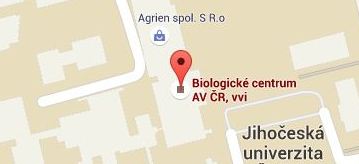
Biologické centrum AV ČR, v.v.i.
Branišovská 1160/31
370 05 České Budějovice
hr@bc.cas.cz